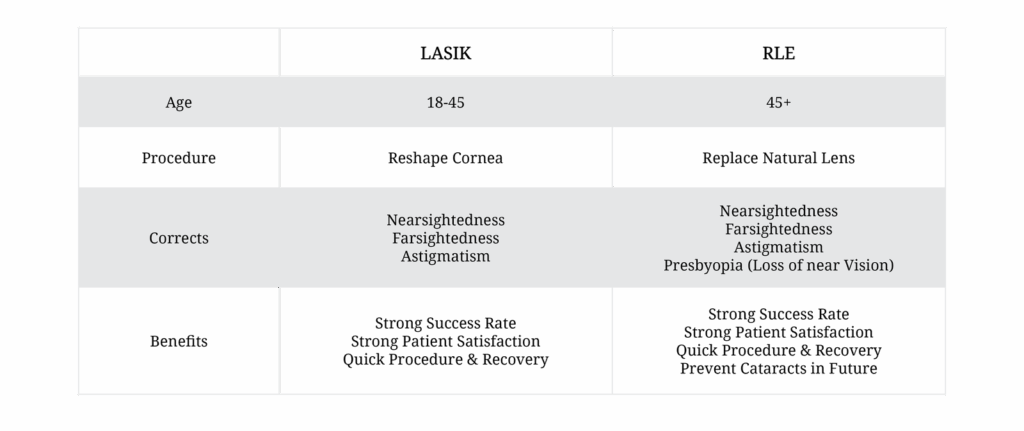
Refractive Lens Exchange is a surgical procedure that replaces the eye’s natural lens with a clear artificial lens called an intraocular lens (IOL).
Over time, the natural lens loses flexibility and clarity, leading to difficulty reading, glare at night, and reliance on multiple prescriptions. By replacing this aging lens, RLE corrects vision at its source rather than compensating with glasses. The procedure is similar to cataract surgery, but performed before a cataract develops, allowing patients to improve vision now instead of waiting for vision to worsen.
Who is a Candidate for RLE?
RLE is often a great open for individuals who:
Are typically over 40
Need reading glasses or progressive lenses
Are not ideal candidates for LASIK or PRK
Have thin corneas or high prescriptions
Want a long-term vision correction solution
Desire greater visual independence for work, travel, or daily life
How Refractive Lens Exchange Improves Vision
RLE improves vision by replacing the eye’s natural lens with a clear artificial intraocular lens (IOL). As the natural lens ages, it loses flexibility, leading to difficulty with reading, glare, and increased dependence on glasses.
RLE corrects vision at its source and allows your surgeon to customize results using advanced lens technology based on your visual goals and lifestyle.
Lens options may include:
Monofocal lenses for distance vision
Toric lenses for astigmatism correction
Extended depth-of-focus lenses for a broader range of vision
Multifocal lenses to reduce reliance on reading glasses
Adjustable lens technology for personalized visual outcomes
Because the new lens does not age, RLE provides long-term vision correction while preventing future cataracts.
The artificial lenses used in RLE are designed to last a lifetime and typically do not require replacement.
While many people experience significant improvement in vision and reduced dependence on glasses, some may still need glasses for specific tasks, especially if monofocal IOLs are used.
Most patients experience improved vision within a few days. It’s normal to experience some discomfort, redness, and blurred vision initially. Avoid strenuous activities, swimming, and rubbing your eyes for a few weeks. Follow your surgeon’s postoperative care instructions, including using prescribed eye drops and attending follow-up appointments.